
Regain Fertility with Precision Andrology & World-Class Microsurgery
Male Infertility: Vasectomy Reversal
Professor Asif Muneer offers internationally recognised expertise in the most effective proven surgical techniques for male infertility, based in Central London.
Whether you’re looking to reverse a vasectomy or explore sperm retrieval options, our advanced microsurgical approach maximises your chance of biological fatherhood: safely and compassionately.
An ultimate professional that puts you at ease with his tone and mannerisms, as expected very knowledgeable. explains your treatment and the plan going forward clearly and concise. Very friendly approach. Would recommend Mr Muneer to anyone
Vasectomy Reversal Patency Rate
With pregnancy rates of 55-70% depending on time since vasectomy
>95%
Significantly above international benchmark
Male Infertility
Approximately 1 in 7 couples experience infertility, with male factors involved in over 50% of cases. At Harley Street Andrology, we specialise in identifying and treating the underlying causes of male infertility using advanced diagnostic techniques, endoscopic techniques and microsurgery.
Surgical treatments include microsurgical vasectomy reversal, microsurgical varicocele ligation and microsurgical sperm retrieval(microTESE).
One of the most common causes is azoospermia: a condition where sperm is absent in the ejaculate. This may result from a previous vasectomy, congenital blockage, injury, or problems with sperm production within the testicle itself.
We specialise in helping men in these two categories:
Post-vasectomy patients wishing to restore fertility.
Men with no sperm in ejaculate (azoospermia) needing direct sperm retrieval.
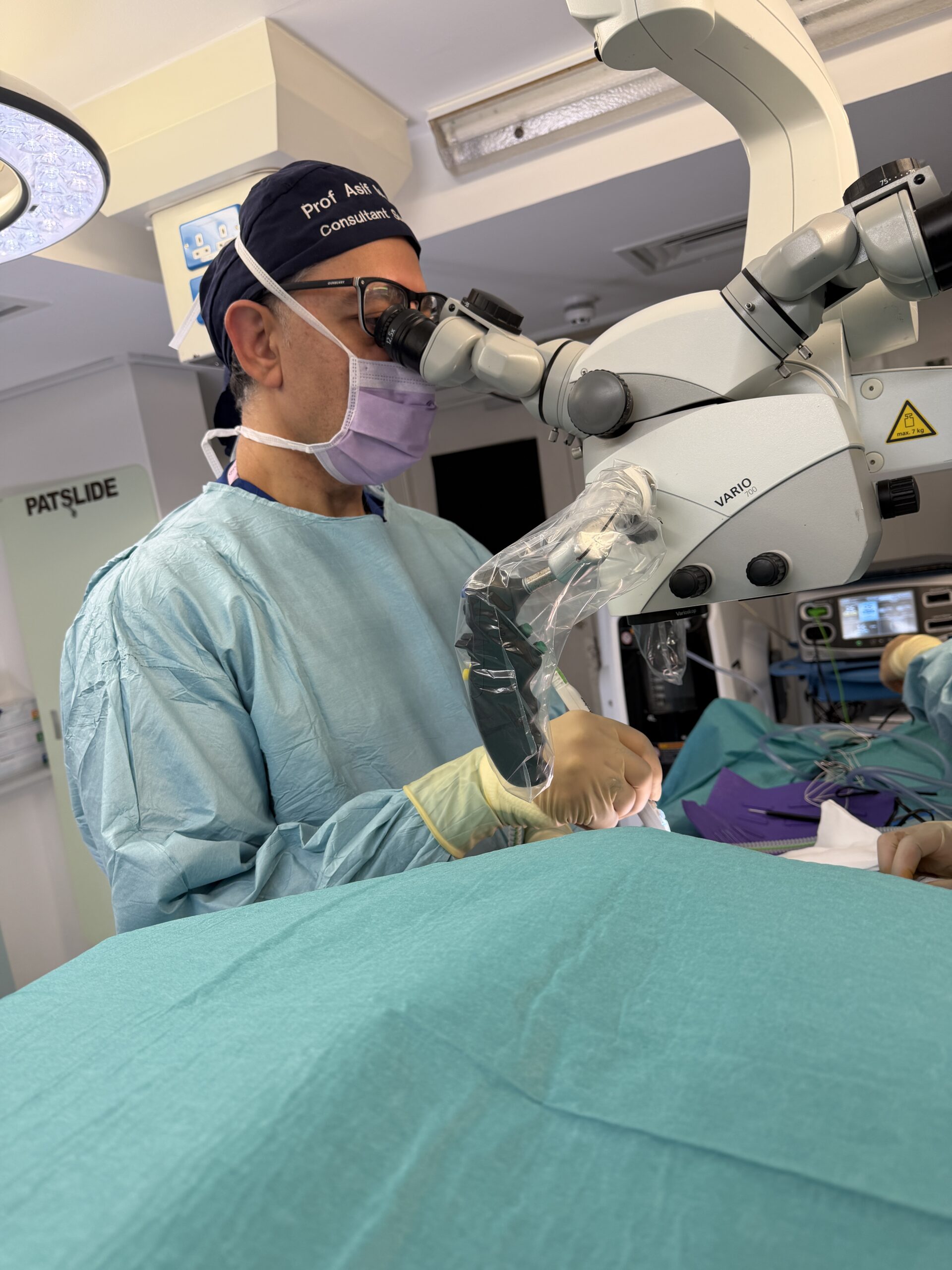
Microsurgical Vasectomy Reversal (Microsurgical Vasovasostomy)
If you’ve had a previous vasectomy but want to conceive naturally again then a vasectomy reversal is an option.
Professor Muneer offers a world-class microsurgical vasectomy reversal service with one of the highest patency and pregnancy rates in the UK.

Who is it for?
- Men who have had a vasectomy and wish to restore natural fertility.
- Couples seeking to conceive naturally, avoiding assisted reproductive techniques like IVF.
- Men experiencing post-vasectomy pain syndrome, where reversal may provide relief (rare cases).
What happens during the vasectomy reversal?
Microsurgical vasectomy reversal is a delicate procedure performed under an operating microscope for precision. Depending on intraoperative findings, one of two techniques is used:
- Vasovasostomy (VV): Direct reconnection of the severed ends of the vas deferens, typically chosen when sperm or clear fluid is found in the vas during surgery.
- Vasoepididymostomy (VE): A more complex procedure connecting the vas deferens to the epididymis, required if blockages are present in the epididymis (often due to longer time since vasectomy).
KEY DETAILS:
- Performed under general anaesthesia as a day-case procedure.
- Small incisions are made, often at the site of the original vasectomy scars, with dissolvable stitches for closure.
How effective is a vasectomy reversal?
Patency Rate: >95%
More than 95% of patients' sperm returned to semen
Pregnancy Rate: 55–85%
This depends on years since vasectomy, and other factors
Highest Success Rates
Due to high volume & accuracy, we exceed international standards
Is Vasectomy Reversal Safe?
Vasectomy reversal is generally safe as it is performed through the scrotum. Like any surgery, they carry some risks, including rare complications such as bleeding, infection, chronic pain, or failure to restore fertility.
Recovery Instructions After Vasectomy Reversal
- Immediate Post-Procedure: Expect mild discomfort, swelling, or bruising for a few days, manageable with cooling packs and simple analgesia.
- Activity Restrictions: Avoid strenuous activity, heavy lifting, and sexual activity for 3 weeks to protect the anastomosis, which is where the new connection has been performed.
- Follow-Up: Semen analysis at 6 weeks to confirm sperm return, with additional tests as needed.
- Driving: Patients cannot drive immediately after general anaesthesia and should arrange transport home.